Geology
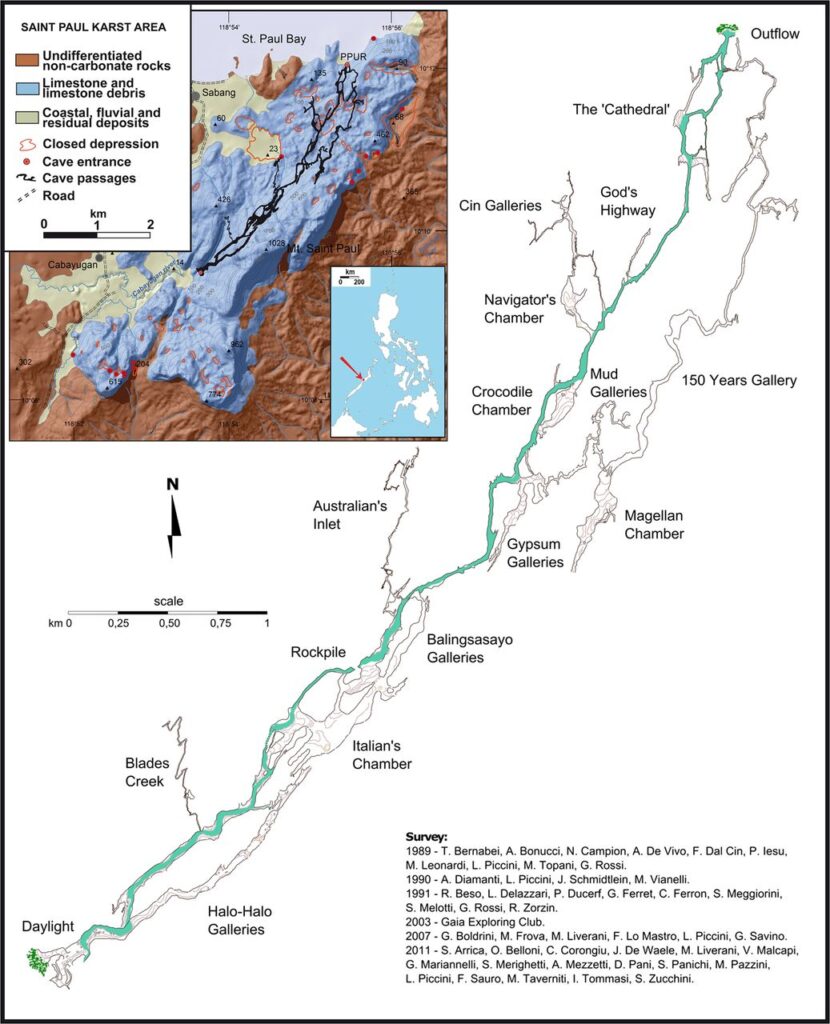
The limestone or karst formation of the Puerto Princesa Underground River (PPUR) is estimated to be around 20 million years old, making it an exceptional geological record of the region’s ancient natural history. Over millions of years, processes of erosion, weathering, and tectonic activity have shaped this landscape into the dramatic cliffs, rugged terrain, and extensive cave systems that characterize the park today.
Stretching approximately 11 kilometers in length and varying in width from 3 to 5 kilometers, the karst formation covers an estimated 35 square kilometers. Its unique topography includes sharp limestone peaks, deep sinkholes, and intricate cave passages, providing a striking example of a mature karst system and offering scientists a valuable natural laboratory for the study of geological processes.
Beyond its geological structure, the PPUR is also remarkable for its mineral diversity, hosting a total of 11 identified minerals. Among these is the exceptionally rare Serrabrancaite, a manganese phosphate mineral that is formed through the mineralization of guano. The presence of such rare minerals highlights the intricate connections between the park’s geology and the biological processes that occur within it.
These geological and mineralogical features, combined with the ancient karst landscape, make the PPUR not only a site of stunning natural beauty but also an important area for scientific research and education. Its unique formation continues to attract geologists, ecologists, and nature enthusiasts alike, reinforcing the park’s significance as a natural wonder worthy of preservation and study.