National Geological Site
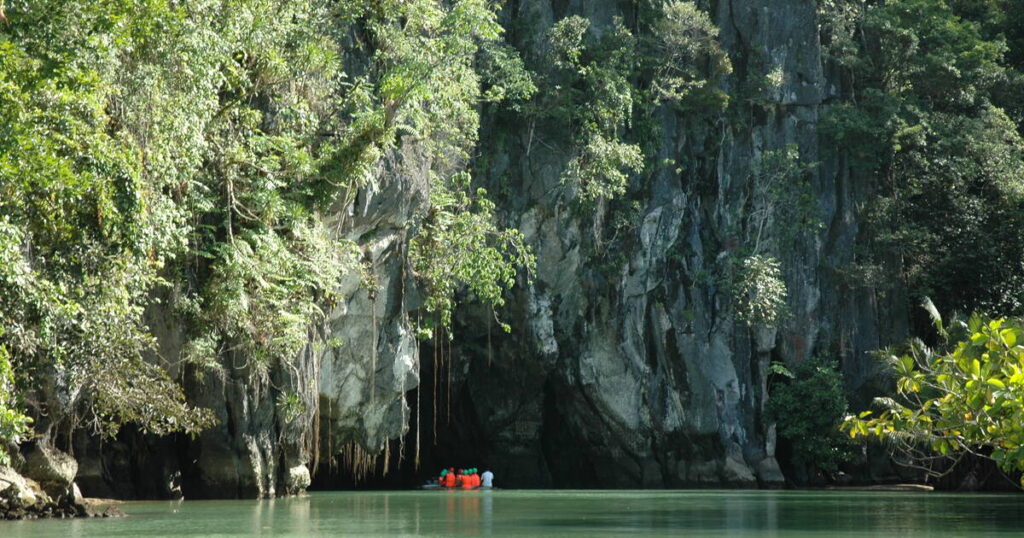
In recognition of its scientific importance, exceptional uniqueness, and high scenic value, the National Committee on Geological Sciences (NCGS) officially declared the St. Paul limestone formation within the Puerto Princesa Subterranean River National Park as a National Geological Monument on December 11, 2003. This designation acknowledges the site as a permanent natural laboratory for studying geological processes, karst formation, and mineralization, providing valuable insights for both researchers and students of earth sciences.
The St. Paul limestone formation joins other notable geological sites in the Philippines that have received similar recognition, including Montalban Gorge in Wawa, Rizal, Taal Volcano in Batangas, the Chocolate Hills of Bohol, the Ilocos Norte Sand Dunes, and the Hundred Islands in Alaminos, Pangasinan. These monuments highlight the country’s rich geological diversity and underscore the importance of protecting unique landscapes that are not only scientifically significant but also visually spectacular and culturally valued.